Showing posts with label breastfeeding support. Show all posts

Tuesday, June 27, 2017

Your Secret Weapon for Breastfeeding Success

From the NPR Morning Edition, June 26, 2017
by Glenni Lorick, IBCLC

Yesterday NPR (National Public Radio) ran a fascinating story about breastfeeding mothers in Namibia. It is really worth taking a few minutes to listen to it.  It turns out that mothers there struggle with breastfeeding just like mothers in the United States do. They get sore nipples; they may have supply problems; they have to learn to breastfeed just like American moms do. However, they have a huge advantage that the vast majority of US moms do not have: a culture of breastfeeding.

The Grandmother Factor

This article explains in detail how the Himba people in the northern desert of Namibia have a culture that makes breastfeeding work. They live in mud huts, and babies are born at home, so there is no separation of mother and baby after birth for medical procedures. Their maternal and infant mortality rates are both high. For every 100,000 births, 265 mothers die, and or every 1000 live births 36 babies die. Obviously, I am not advocating giving birth in a mud hut as a solution to our breastfeeding problems. And even Himba mothers do struggle with learning how to breastfeed.

When 17 year old Bethany had her baby, her mother
supported her and taught her how to breastfeed.
But that is where they have the amazing "Grandmother" factor. Himba mothers actually go in the third trimester of pregnancy to the compound where their own mother lives. The new grandmother sleeps in the hut with mother and baby, even serving as an alarm clock to awaken the new mother and remind her to nurse. The grandmother teaches the new mother how to position the baby, how to help baby get the best latch possible, how to safely sleep with baby, and all the other little details necessary for parenting. The new mother remains with her mother for several months following the birth.

In the US we have a generation of great-grandmothers whose doctors told them that formula was the best way to feed a baby. Their daughters who are now grandmothers likely had no support for breastfeeding from either their mothers or the medical community. This lack of help often spelled lactation failure for that generation of mothers. Those who persisted are able to support their daughters in an amazing way, and usually those daughters benefit from their wisdom.

A grandmother who can help with breastfeeding is a treasure.
But there is another glaring obstacle that mothers in the US face. They are expected to jump right back into the routines of life within days or weeks after giving birth. I have worked with mothers who had to return to work or school as little as 2 weeks after giving birth. They aren't even able to give their bodies time to recover, let alone get breastfeeding well-established. The scant 6 weeks that so many employers deem as "generous" maternity leave is actually the bare minimum to move a mother beyond the post-partum period. Employers who allow 12 weeks are much more in tune with what mother and baby both need.

Another big difference between our culture and the Himba culture is the normalization of breastfeeding within the society. There it is completely expected that mothers will feed babies at the breast. Although there is some supplementation with goat's milk when mothers don't have enough milk, it is not the normal way to feed a baby in that culture. In contrast, new mothers here often feel uncomfortable and embarrassed about breastfeeding their babies with anyone else around. We do not have a breastfeeding culture here where children grow up seeing breastfeeding as the normal method of infant feeding.

Lessons We Can Learn from the Himba People


So how can we take this information and use it to increase breastfeeding success among US mothers? I see several ways in which we can learn from the Himba culture.
Skin-to-skin contact during the early days is
critically important for Mother and Baby.

  1. Mothers and babies should NOT be separated at birth for any reason unless there is a genuine medical reason. Many hospitals have implemented policies to protect the Golden Hour because the evidence clearly points to improved outcomes when mothers and babies have this uninterrupted time together immediately after birth until after the first feed. 
  2. Mothers and babies should have as much skin-to-skin contact as possible in the early post partum period. Research shows that this elevates hormone levels which increase mother/baby bonding. It also helps milk come in faster and increases the rate of breastfeeding success.
  3. Mothers need to go home to somebody who will take care of them as they are learning to care for and feed their babies. This person needs to be supportive of breastfeeding, ideally having breastfed herself. Mothers need several weeks of this encouraging care and support. If a supportive grandmother, sister, aunt or close friend is not available to fill this role, a postpartum doula is an option. A Nurturing Moment actually offers a postpartum support package that provides some of this kind of ongoing support to new moms who don't have a grandmother/sister/friend to help out. It is very interesting to note that in the NPR broadcast yesterday morning they actually mentioned IBCLC's as an alternative for mothers who don't have "the Grandmother factor."
    India has a mandated 6 month maternity leave!
  4. Our lawmakers need to get serious about providing a minimum of 12-16 weeks maternity leave to employees. As a small business owner, I understand the hardships that can cause, but as a lactation consultant, I see daily the hardships caused by the lack of adequate maternity leave. Research as well as the experiences of mothers and companies in the rest of the world have clearly shown the benefits of making sure that a strong maternal leave policy is implemented across society. 
  5. From their earliest days, children need to see breastfeeding as the normal way that babies are fed. Children's books should feature pictures of babies nursing, not getting a bottle. Mothers should try to expose their children to other breastfeeding mothers, explaining that this is how babies are designed to be fed. Science classes at the elementary level should include breastfeeding in their curriculum when children are learning about mammals. At the secondary level, breastfeeding should be included in instruction about reproduction and family planning. A breastfeeding culture is built by one mother and baby at a time normalizing infant feeding at the breast. I am optimistic that together this generation of mothers can make that happen!


Tuesday, March 28, 2017

Daddy's Important Role in Breastfeeding

Kristi's husband cuddled so Mom could shower.
by Glenni Lorick, IBCLC
A couple of weeks ago we did an ANM LIVE video about how important Dad is to the breastfeeding relationship. We asked you to share some of the ways that your husband makes nursing easier for you, and like always, you had terrific responses. Today I want to share some of those responses as a way to help all of our dads think about the many ways that they can be involved in breastfeeding.

Practical Help

Meeting obvious (or not-so-obvious) needs is a terrific way that Dad can help make breastfeeding easier for Mama and baby. April noted that her husband cleans the pump parts and gets the pumping bag ready to go in the morning. "He is always super careful never to waste milk." She adds that, "He always asks about how my pumping at work is going and tells me, 'You're a good cow, Bess.'"

Kayla said, "My husband has been amazing. He makes sure I have water every time I feed my son. He brings me snacks, cleans my pump parts if I need him to, and holds the baby until I am ready. He has been so supportive constantly making sure I take my vitamins and calling me to make sure I have eaten enough." Numerous mothers mentioned how helpful it is for Dad to make sure they have water and a snack while nursing.
Emily's husband keeps their 3 year old entertained.

Taking care of older siblings is a wonderful way for Dad to really make a difference. Carrie says, "He helps me get big sister ready for bed so I can nurse little sister to sleep!" Emily said of her husband: "He helps do so much. The biggest help is keeping the 3 year old out of my hair."  

 Making sure Mom gets sleep and helping with diaper duty are other really practical ways that Dad can help.  Lacey noted that her husband "also changed every diaper for the first week and all the night time diapers when he started back working." Sometimes Mom just needs to get a shower. Kristi's husband was very helpful at those moments: "When I needed to shower, he would do skin to skin!" Jessica said, "My husband takes over and sends me to bed with earplugs after some feedings to get a good nap without any interruptions until the next feeding. He also makes sure I have diapers and wipes stocked, and he keeps the laundry going."

Katie's husband is a SAHD.
Tiffany's husband demonstrated another very practical way that Dad can step in "In the beginning he did literally everything. I only fed the baby and napped for the first 2 weeks. He cleaned, cooked and took care of me through my daughter and I having thrush and a foremilk/hindmilk imbalance. He also never pushed formula on me when she wasn't gaining properly." When Dad picks up the burden of cooking, cleaning and laundry those first weeks, it really makes a difference.  

Katie's husband is a stay-at-home-dad who has been very proactive in supporting her breastfeeding and pumping: "He's become a pro at pace feeding, bottle prep and milk storage. He doesn't complain when I ask for water, snack or anything else in the middle of feedings. He has so much patience with us. And most importantly, he helps me defend our decision to breastfeed our son to anyone who speaks out of place about it."

Help at the Breast
Haley's husband helped syringe feed.

Sometimes Dad ends up actually helping Mom latch the baby on. Lacey explained, "My husband helped me latch my son all of the time when he was a newborn because I had trouble doing it. He would put pillows under my arms and make sure I was comfortable every time I breastfed." Brittany's husband was helpful in a similar way. She says, "Dad actually latched her in the hospital during our skin to skin for the first time!! I was still in shock that I was a mom!!"

When Mom and baby struggle with latching, sometimes suck training or finger feeding is necessary. Haley's husband helped with that; she explains: "Dad took time to clean his hands to my satisfaction and syringe feed our sweet girl rather than bottle feeding because I was nervous about nipple confusion and still needed to pump a little due to an extremely painful inverted nipple."  

Brittany's husband latched her baby on
for her right after birth.

Emotional Support

Another critical area where Dad can make all the difference in the world is emotional support. Many mothers expressed tremendous appreciation for their partners' words of affirmation. Annie said, "My husband helped me most by encouraging me to do whatever I think is right, by never letting me down, by reminding me what my goal was when we got thrush again or my milk was gone, by telling me how beautiful I am while feeding our daughter and by telling me what a wonderful mother I am." Sarah felt like her husband has always been her biggest ally. She explains, "When I was pregnant there wasn't even a question of if I'd breastfeed. He spent so much time reading. I remember seeing his search history full of things like 'how to help my wife breastfeed.' We still had moments when he didn't feel like he could do enough to provide comfort for our nursling. I wish he would have really known supporting me was enough."   

Kellie's husband always has their backs!
Supporting Mom when she nursed in public or around extended family is another area where Dad can make a huge difference. April noted that she appreciated her husband "being supportive about nursing in places like church or restaurants which I know he might have struggled with because he can be very modest."  Nora said of her husband, "He will almost always put his arm around me, especially when I seem timid about nursing in public. It makes me feel supported and protected."

Sarah's husband supported her unconditionally.
Sarah sums up the epitome of a supportive husband as she describes the man she married: "He is my rock and my safe place, He supported me every step of the way when I chose to drive 3 hours to have our second baby after a traumatic birth experience with our first. He advocated for our son to get the help he needed with his tongue tie when we were in the hospital and I was just to tired and sore to deal. He was there helping me and supporting me when we discovered our son had food intolerances and I had to cut so many things out of my diet. He never questioned my decision to keep nursing even when others did."

Any father who wants to can be his wife's greatest advocate and cheerleader. You've just read numerous ways that you can make a real difference for your wife. I look forward to seeing more and more fathers leading the way in encouraging their wives as they provide baby's perfect food!

Monday, March 28, 2016

AlabamaTongue and Lip Tie Support Group Is a Great Resource

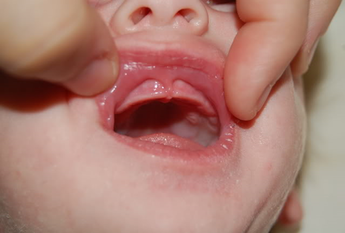
Photo from Stanford Medicine.
by Glenni Lorick, IBCLC

Alabama mothers are fortunate to have a terrific new resource if they are struggling with breastfeeding due to upper lip and tongue tie. This Facebook page administered by Jaclyn Clark and Jessica Claire Hall offers a wealth of information. From provider reviews to incredibly informative articles about ties, this group is the perfect place to really educate yourself on this issue.

Jessica is a peer breastfeeding supporter who had local moms coming to her with questions about this issue. She was sharing information that she had discovered on an individual basis mother by mother. It just made sense to her to put all that information in one place and create an Alabama-based resource for families.

Jaclyn had problems nursing from the very beginning with her baby. Even though I saw him as a newborn, I didn't recognize his posterior tongue tie. Jaclyn says, "No one here was very proficient at PTT then, and I couldn't get anyone to validate my belief that it was. At the time, I couldn't go against my husband who was concerned about a possibly unnecessary painful procedure to go out of state to a preferred provider. The closest one at that time as 6-8 hours away." He was 6 months old, and she was struggling with supply; she did the best she could, taking domperidone and supplementing with donor milk and formula. Most people didn't see the need for any kind of revision. Through all of this, Jaclyn was tireless in her pursuit of answers: "The 'process' of trying to figure out why my son couldn't transfer milk efficiently was what led me to the wealth of knowledge and connections with trailblazers in the world of tongue ties and breastfeeding. And it gave me a certainty that a mother's intuition is to be trusted and listened to."

In the month since beginning the group, multiple families have posted glowing reports about their providers and their revision experiences. Many people have joined the group with questions about tongue and lip tie, and they are met with quick responses both from members and administrators. This group is designed to provide relevant information to families in Alabama and surrounding areas.
Image from First Food for Baby
Jessica Mays is a local mom who received a lot of input from the Alabama Tongue and Lip Tie Support Group. Both of her babies have had ties, but she became aware of it immediately with her second child. She says, "The group has been good. A lot of the resources have helped us. The exercises they have shared have been really helpful, too. Beyond the information that they have shared, the women themselves, especially Jessica Hall and Jaclyn have been incredibly helpful. They have first hand experience, have been there and done that, and aren't afraid to share what they've learned."

This page represents an independent state chapter of the Tongue Tie and Lip Tie Support Network. The network exists to raise awareness and provide research-based information about ties. They also help parents find providers who understand the relationship between an infant's oral anatomy and breastfeeding.

While many providers will simply look at baby's weight gain and assume that good weight gain means there is no problem, that is not always the case. Upper lip and tongue tie can be the reason a baby is slow to gain weight, but they can also cause several other problems. Often what is treated as reflux can be traced to a tie because of the excessive air baby is swallowing during feeds. Ties can also be responsible for a mother having an overactive letdown or excessive milk supply.

If you are concerned that your baby might be having some of these issues, check out this group!


Thursday, August 13, 2015

Breastfeeding from a Dad's Point of View

Jason and Madelyn
Today's blog is very special. I really appreciate the time that this dad took to write it. I hope it reaches as many dads as possible!

By Jason Argo, Guest Blogger

The week of February 17, 2011, our daughter Madelyn was born. My wife was hoping to be able to breastfeed Madelyn when she came into this world, and it was a rough road of letdown, after letdown (no pun intended).  From the start, none of the first nurses we had in the hospital wanted to help with the situation, but rather always wanted to  stuff a bottle in our little girl’s mouth. The lactation consultant came in the next morning, but was of no help. She did not really evaluate the baby and did not tell us that Madelyn had a tongue tie, and that was going to make it difficult for her to latch on.

Our nurse that morning, Leah, was like ray of sunshine to the situation. She was so helpful to Amanda, first taking control and getting her physical pain to a manageable level. Then she lit a fire under the nutrition director because Amanda ordered lunch, and 2 hours later it still wasn’t there, but she hated being a burden and didn’t want me to go get it. However, her biggest task of all was guiding in breastfeeding – I do not think she was an IBCLC at that time, but but she offered wonderful nursing support. She also briefly pointed out that Madelyn had a tongue tie. I cannot brag enough on our favorite nurse on the delivery floor of Huntsville Hospital - Leah does an amazing job!  Leah felt the tongue tie needed more evaluation, so she brought the only available IBCLC back to the room which happened to be the same one who initially came in.

She still didn’t touch the baby but instead pointed out everything my wife had done wrong, never anything positive.  “You used a pacifier, the baby is confused.” “You’re sitting with bad posture.” "You’re taking pain medication”. The latter two were unavoidable as my wife has several musculoskeletal conditions that left her in excruciating pain after 18 hours of induced labor, 13 of which were without an epidural, 4.5 with it, and the last 30 minutes when she delivered it had worn off.  Once she started spit-firing all the insults and discouraging statements, Leah took control and told the IBCLC we had it from there and she could leave.

Amanda and Madelyn
Then not long after leaving the hospital, more challenges were flying at Amanda. She faced opposition from her family and mine as well. She would get comments like, "You’re starving her; make her a bottle." Or "Nobody wants to see that;go to another room because you just want to do draw attention to yourself." We also heard this classic line, "Other members of the family want to feed her." None of these things is something a new mother wants to hear, especially coming from family. There were even times where I would unintentionally drop an unsupportive comment. Like most dads, I often have foot-in-mouth syndrome; sometimes I shove it in there up to my knee!

We soon realized though that something was not right when Amanda would try to nurse Madelyn, but she just could not latch. I could not stand to see how much physical pain she was in and how emotionally broken she was over the whole situation. Madelyn was not gaining weight, and this is how we found Glenni at A Nurturing Moment. We came home on Sunday, and by the next Saturday Amanda was in so much pain and so exhausted she was walking through the house like a zombie carrying a can of “just in case” formula the hospital sent home with us.  I was cleaning the kitchen listening to a local Christian radio station and heard an ad for A Nurturing Moment where breastfeeding support was mentioned.  So we called.

Glenni is also another ray of sunshine in this story because she helped in so many ways. She really helped Amanda physically and mentally on some the struggles she was facing. She did everything she could to try to increase Amanda’s supply. She even taught us how to get Madelyn latching the way she needed to be latching.

Amanda always did her best to pump while she was at work but was getting so little. We would move milk back and forth between home, work, and her Mom’s house.  Madelyn suffered from a severe case of silent reflux, never really spitting up, but choking and sputtering and sometimes struggling to breathe, so it was important to us not to have her in a day care with multiple kids per adult. Therefore, we commuted 2 hours each morning and 2 hours each evening to keep her with family.  Most work days we didn’t get home until 9 or 10 PM.  Amanda would take a shower and lie down to nurse the baby while I put away the pumped milk, and I would unpack and load all of her pump parts into the dishwasher.

Each morning I got up long before she did to pack her pump parts into her pump bag and pack snacks for her to eat while she pumped, and then I woke her up so she could nurse the baby while I made and packed our lunches.  Sure, I could have used extra sleep, but it was all worth it because even though we were primarily using formula by 8 weeks, she still got between 2 and 4 ounces of liquid gold every day. Other than the reflux and the occasional reaction to vaccinations, Madelyn did not once catch any cold or get sick at all until a month before she turned 1 when she got an upper respiratory virus.
Even Zeus the dog adores Madelyn!

I write this because men need to realize that if their wives (or significant others) want to
breastfeed the baby, they need to help them breastfeed. To be honest and truthful BREAST IS BEST!!! There are so many things that are put in formula – go read the labels, or open a can and smell it – it even tastes metallic, but there is nothing like mother’s milk. Daddy can do other things to bond with baby like bathtime – make it fun!  Act silly!  Some of the best memories Madelyn and I have when she was a baby are from bathtime!  She’s now almost 5, ask her about the adventures of Soap Monster!

Please, please, I ask the men of the families to encourage  your love to the best of your ability if she is breastfeeding. Don’t let her hide in stalls in the bathroom; don’t let her hide anywhere for that matter. If your child is hungry, your child’s hungry. Don’t run all over God’s creation trying to find a “private” place, because a mom should not be isolated and shamed during a time she deserves to be loved and celebrated. It is a special connection that no one else can have with the child besides mommy, but if daddy is supportive, it grows a special connection between mommy and daddy.

Saturday, February 14, 2015

FaceBook Is Blocking This Breastfeeding Blog!

By Glenni Lorick, IBCLC
Today I created a brand new blog called TechNOboobies in response to Facebook's ongoing insistence on blocking this blog, Nurturing Moments. I really hate that it has come to this, but Facebook seems to have absolute disregard for nursing mothers and babies. In their own information, they proclaim that they don't block breastfeeding images, yet they have a long history of doing just that. And now they have resorted to blocking my blog  that deals with Breastfeeding.

A Call to Action

I would like to ask everybody who reads this to do two things:
1. Please share the link to this blog post, then when you see the Security Check at the left saying the link might be unsafe, please click on "let us know" and let Facebook know that they need to stop blocking Nurturing Moments because there is nothing unsafe here!
2. Share the link to TechNOBoobies.  I would like to highlight stories of social media discrimination against breastfeeding everywhere they occur. This isn't just about Nurturing Moments. It is a war to normalize breastfeeding within our culture. Are you up for the fight?

Tuesday, October 7, 2014

Resource Guide for Madison County Moms


By Glenni Lorick, IBCLC
Let's face it, new moms need support! You need people around you who will encourage you in your parenting decisions and help you not to feel isolated. Many women find this support with family members and close friends. But what happens when your family members and friends end up discouraging you, rather than encouraging you? Fortunately we have a plethora of local resources available to help you navigate the occasional rough waters of being a mommy.


Baby Wearing
Research shows that babies who are worn by their parents experience a wide variety of health benefits. We have a very active local babywearing community!
·         RocketCity Sling Swap – Monthly informational meetings and swaps

Breastfeeding
We are blessed to have a variety of support options for nursing moms in the Tennessee Valley.

·        A Nurturing Moment – breastfeeding supplies, breast pump and baby scale rental, lactation consultation with IBCLC in home or office www.anurturingmoment.com (call 256-489-2590 for more info).

·         Hospital support :

o  Athens Limestone Hospital: Free breastfeeding, childbirth and parenting classes for parents delivering at the hospital. Breastfeeding Mothers' Support Group Fridays from 10:00 - 11:00 am.
o   Crestwood: Free breastfeeding, childbirth and parenting classes. 
o   Huntsville Hospital: Free breastfeeding class; Breastfeeding Mother's Group meets Tuesdays from 10:00-11:00 am in the Huntsville Hospital Women's Pavillion (call 256-265-7285 for more info).
o   Madison Hospital: Free breastfeeding class; Breastfeeding Support Group meets Mon. 10:30-12:30 and Thurs. 6:30-8:30 pm in the Madison Hospital Wellness Center Classroom

·         La Leche League
o   Huntsville: Third Thursday of the month at the Rock 6:30-8:30 pm. Contact: Jana 256-455-4746 
o   Madison: Second Monday of the month at Madison Public Library 10:15-11:15; Fourth Thursday of the month at Kathryn’s House – 102 Heatherwood Dr., 35758   7:00 – 8:00. Contact: Stephanie: 256-348-9700    

·        MommyMilk Meet-up : First Monday and Third Saturday of each month at 10:00 am at A Nurturing Moment. Contact: Glenni Lorick 256-658-8210  

Childbirth
Many women are unable to have the birth they had hoped for. Sometimes it is the result of a genuine medical emergency. Other times it may be due to unnecessary interventions. Either way, mothers need a place where they can be supported as they talk about their birth experiences.
ICAN - The International Cesarean Awareness Network offers support and information for mothers - whether they are still pregnant or already have a baby. They meet at Willowbrook Baptist Church. Check their Facebook page for details of upcoming meetings.

Parenting
Many parenting philosophies exist. You have to figure out what works best for you and your baby. Proponents of Attachment parenting point to a body of research that shows positive outcomes for families.
·         AttachmentParenting International – monthly meetings – check Facebook for updates.   Contact: Lysa Parker 256-503-1454 and Tiffany Hamblen 501-472-0312


Thursday, July 31, 2014

We're Kicking Off WBW in a BIG WAY

by Glenni Lorick, IBCLC
World Breastfeeding Week begins August 1! This annual celebration sponsored by the World Alliance for Breastfeeding Action (WABA) focuses on carrying forward the advances that have been made in breastfeeding support and promotion over the last 15 years. In 1990 the United Nations together with member nations set forth 8 Millenium Development Goals. Goal 4, To Reduce Child Mortality, is tied in very closely with promoting and supporting breastfeeding. We are excited to celebrate this year's World Breastfeeding Week - Breastfeeding: A Winning Goal for Life.

We have several really exciting events planned locally for this week. I hope you will be able to be part of each one!


The Big Latch On

This year's event has been organized by Brittany Campbell who has marshalled an incredible group of volunteers to make this the biggest breastfeeding event Huntsville has ever seen! Join nearly 100 nursing (and pumping) mothers on Saturday, August 2, at 9:30 at Kid's Space to be part of the excitement. The first 25 moms to register will receive swag bags chock-full of fun goodies! At 10:30 sharp we will count every baby who is latched on and nursing. Moms who are exclusively pumping or expressing milk will also be included in the count. There are some terrific door prizes, too! A Nurturing Moment has donated a lactation consultation, a set of Babee Greens wool nursing pads, and a box of Milkscreen test strips (just in case you want to enjoy more than one celebratory drink...). Lots of other local vendors as well as several national vendors have donated amazing door prizes as well!

A Nurturing Moment won't open until 11:00 am on Saturday because we will be at the Big Latch On!!

Give a High 5

Throughout the summer we have been celebrating the babies who are part of the ANM family! This Saturday, August 2, from 11-3 you will have the opportunity to put your child's handprint on a canvas that will be displayed on our wall for years to come! We love our mamas and babies...and we love seeing those babies grow into toddlers, pre-schoolers and older children. It is such a privilege for us to be part of your family's life, so this project is especially dear to my heart!

Breastmilk, The Movie

This movie follows real people through their breastfeeding journeys, showing what breastfeeding is really like. It shows success and it shows failure...and it shows the middle ground, too. Chatty Claire  is bringing this movie to Huntsville on Saturday, August 2, at 7:00 pm at the Chan Auditorium at UAH. Tickets are just $10, and you can get your ticket online in advance. Following the movie there will be a panel discussion that you won't want to miss. There will also be some terrific door prizes! A Nurturing Moment has donated a lactation consultation, a nursing scarf, and a custom bib that says "Silly Daddy, Boobs are for Babies." 

You actually have the opportunity to WIN a pair of tickets TODAY ONLY! Happy Papoose is giving away a two pack of tickets here.

Mommy Milk Meet-up

Join other breastfeeding moms Monday, August 4, at 10:00 am at A Nurturing Moment as we have the monthly meeting of our breastfeeding support group, Mommy Milk Meet-up. We will be talking about breastfeeding promotion and support. We'll also be asking moms to share about their breastfeeding goals and how breastfeeding has impacted their lives. In celebration of World Breastfeeding Week, we will have healthy snacks and maybe even some lactation cookies! This is a wonderful opportunity to be around other nursing mothers, to enjoy some fun fellowship and to get lots of encouragement. Of course, if you need professional breastfeeding help, I will be there, too.

I look forward to seeing each of you a lot over the next few days. This is going to be ONE AMAZING WEEK!!

Monday, December 30, 2013

The Mom Foundation Provided Over $1500 in Lactation Services in 2013

by Glenni Lorick, IBCLC

We've just finished tallying our figures from 2013, and this year The MOM Foundation provided $1781 in lactation consultation services to mothers who otherwise wouldn't have been able to afford to get breastfeeding help! An average of 1 out of every 4 consults this year has been reduced fee. We are so thankful that we have been able to help these moms!

We have also given out dozens of nursing bras this year. We have plenty of bras in 38, but are low on 32 and 34 band sizes as well as the larger sizes over 40. Remember that any time you bring in a bra for our Bosom Buddy program, we give you a discount on that day's purchases!

We have several projects in the works as we enter 2014. Of course we will continue to offer a sliding fee scale for our in-store consults. We are also focused on educating the demographic of moms who might not normally consider breastfeeding as an option. Our goal is to make sure that every mom in the Tennessee Valley knows the benefits of breastfeeding and can get the support she needs.

One of our newest initiatives at A Nurturing Moment is our Skype consults. If you can't make it to the store, we can actually do a consult via Skype. You will be in the privacy of your own home, and we will be able to evaluate your breastfeeding via webcam and make suggestions. The cost for a Skype consult is just $45. The best part is that a portion of every Skype consult fee goes toward helping a low-income or teen mom get breastfeeding support!

If you've been abundantly blessed this year and want to make an end-of-the year donation to an organization that is making a difference in the lives of local moms, please consider the MOM Foundation! If you have any questions, feel free to call Glenni at 256-658-8210.

Wednesday, October 2, 2013

Breastfeeding Support the Way You Want It!

One of the things that makes A Nurturing Moment different from any other baby store in North Alabama is our emphasis on providing you the very best lactation support possible. Whether you are looking for help with your baby's latch, your milk supply, sore nipples, pumping or weaning, we are happy to help you in any way we can! All of our services are provided by International Board Certified Lactation Consultants, so you can be confident that you are receiving the best care possible. Our staff of IBCLC's have over 30 years combined experience working with nursing moms and babies!

In - Home Consultation

Our in-home consultation service allows you to nurse your baby in the comfort of your home in the place and with the pillows you normally use. The advantage to this service is that it allows the lactation consultant to offer suggestions specific to your every day breastfeeding setting. Mothers of multiples often find it is much easier to have an in-home consultation because they don't have to load up two babies and all their gear! We also find that mothers who have had a Cesarean birth often prefer an In-Home Consultation.
Your lactation consultant will bring a scale so she can weigh your baby before and after the feed. She will also have curved tip syringes, hydrogel pads and nipple shields just in case you need them. If you need a hospital grade breast pump, she will have that available for you, as well! She will stay with you as long as it takes to complete a feed. If you're engorged, she will help you relieve the engorgement. 

The cost for an In-Home Consultation in Madison County is $100. If you live in an adjacent county, the cost depends upon mileage. We charge an additional $1/mile after the first 20 miles, so our LC will set her odometer when she leaves. Upon arrival she will subtract 20 from her mileage, and the remainder will be your additional mileage fee.

In-Store Consult

You can come into our office at A Nurturing Moment for a consult, if you prefer. We will still weigh your baby before and after the feed. In the comfort of our office, we will help you get baby latched on and work through whatever issues you might be having. Our lactation consultants will assess your baby's oral anatomy, positioning and latch, offering suggestions to help you have a successful nursing experience. We have a variety of nursing pillows, so we will do all we can to simulate your home nursing situation as much as possible.

We will spend as much time as it takes to get your questions answered and your situation resolved to your satisfaction. Whether we see you at home or in our office,  we will send a fax to your baby's doctor detailing our visit if you'd like us to. The cost for an in-store consult is $65. However, we offer a sliding fee scale. Because we want all mothers to receive the help they need, we will accept as little as $10. Basically you pay whatever you feel you can afford to pay. We don't ask for any documentation; after your consult, we will simply ask you what payment amount works for you.

NEW:  Skype Consult

We realize that those who don't live very close to Huntsville may not be able to afford a home visit and may not be able to come into town for a consult. So this month we are beginning to offer Skype Consults. We will set up an appointment to meet you via Skype. You need to have a good webcam because we will be assessing a variety of things via Skype, including baby's latch, baby's oral anatomy, positioning, and your nipples. We will offer you a variety of suggestions tailored to your situation and spend the time necessary to help you finish the feed. Because of the flexibility of Skype, these consults can be scheduled almost any time you need them! The cost is $45, and can be paid via Paypal to anm@knology.net when you schedule your appointment or by credit card at the beginning of the appointment.

Whether you choose a consult in your home, in our office of via Skype, you can be assured that you will be receiving top quality breastfeeding support. Our goal is to help you and your little one get off to the best possible start!

Saturday, April 20, 2013

How to Know if Your Baby's Doctor is Breastfeeding Friendly


This week the Academy of Breastfeeding Medicine released a revised protocol  for Breastfeeding Friendly Physicians Offices.  This document offers physicians 19 suggestions that they can implement to ensure that their practice is breastfeeding friendly. Many of the physicians in the Academy of Breastfeeding Medicine are also International Board Certified Lactation Consultants. 

I asked a colleague who happens to be a pediatrician as well as a lactation consultant to pen a guest blog  on this topic. The ABM protocol is great, but it's really written specifically for physicians, not for moms. I thought it would be good for our moms to know what to look for when they are doctor shopping!

Wish List for a Breastfeeding Friendly Doctor

by Traci Lynne Brewer, MD, IBCLC

Dr. Traci Lynne Brewer with her
husband and new baby.
I'm a  homeschooling, stay at home mom, living in Central Asia, pregnant with my third child at 40.  What an interesting turn of events for a pediatrician and lactation consultant born and raised in Huntsville, Alabama.    But, I can't think of a better situation for my family right now. 

In light of my eminent delivery I have been asked to describe my wish list for a breastfeeding friendly doctor for my daughter, due any day now.

Here goes:

Wish #1:  The doctor will want to see me and my daughter 48 hours after discharge from the hospital.  Sure, it's a pain to get the baby and the gear loaded up and make an appointment on little to no sleep, but breastfeeding issues identified early are easier to work on than problems that can develop by 2 weeks of age.

Wish #2:  If my daughter has jaundice, I want breastfeeding to be given a chance.  An elevated bilirubin is not an automatic indication for formula feeding.

Wish #3:  If I encounter a breastfeeding issue that requires more specific knowledge or time than my doctor has, I want to be referred to a board certified lactation consultant.  Evaluations for lactation issues take time, something that doctors frequently lack, even if they are comfortable with breastfeeding advice.  This includes recommendations on how to return to work while continuing to breastfeed.   While I'm wishing, I'll wish for a lactation consultant working in the doctor's office.

Wish # 4:  I would like a doctor that doesn't put a endpoint on breastfeeding.  Finding support for breastfeeding past a year can be difficult.  Wouldn't it be great to have the doctor on your side?

Wednesday, March 13, 2013

Melissa's Story: Why I Do What I Do


By Melissa Florence, MA, IBCLC, RLC


The number one question I get asked is “How in the world did you decide to become a lactation consultant?”  That is a very good question because looking back my goals were to get married, become a nurse/teacher and have 3 children all before I turned 30 (because 30 is old). Ha!  I am now a 35 yr old divorced and single mom to one awesome girl.  It is funny how things change, how we change.  If you know me well then you have heard me say at least once “Everything happens for a reason,” and that is so true. The good and bad happen to us for a reason. So what does this have to do with me? If I had not had my daughter I wouldn’t be where I am today.

Before I had my daughter I had decided to “try” to breastfeed. I had my daughter in September 2003, and breastfeeding went well for a few days then rapidly went downhill. At this time in my life I was going through a divorce, was living with my parents and had very little money. I was a WIC mom. When things started getting rough I called the lactation consultants that I was told to call. I was one week post-partum and had a C-section. I was not supposed to lift more than 10 pounds, nor was I supposed to drive, but I wanted to breastfeed so bad that I ignored all of that --  my child comes first! I set up an appointment and went in. I had $50.00 to my name. The appointment was around thirty minutes, and it cost me $45.00.  Twenty five minutes into the consult my daughter latched and started nursing well! I was ecstatic until the time was up. I asked if I could stay until she finished and was told, “Sure, but it will be another $45.00” which I did not have. I pulled my daughter off (she was screaming), put her in the car seat and walked out. Needless to say we both cried the whole way home.

"Everything happens for a reason." 

The next few months were spent nursing, pumping, supplementing and popping fenugreek like it was candy. All while going through a divorce, dealing with a newborn that had horrible reflux and a not-so-great latch, who was screaming almost all the time and absolutely could not be put down. So when I say I feel your pain, I really do! I would say that I had the “perfect storm” of things going wrong.  After 4 ½ months I dried up -- no more milk. It was because of the stress I was under. I was devastated, and I was ticked off. Why couldn’t anyone help me? Why was it so hard to find breastfeeding support? I made a decision that “God willing” I would not let what happened to me happen to another mother.

 I was raised in believing that if you have a problem you fix it yourself. That is what I set out to do. I wanted to figure out where I went wrong, learn how to fix it and help other moms in the process.  For the sake of this blog not being 10 pages long I will fast forward a little bit. After much, much research on the internet I learned that not only did the tremendous amount of stress I was under lead to my breastfeeding demise, but the fact that I have hypothyroidism also contributed to my milk troubles. Wow!  During all this time Jesus and I became BFFs. I prayed and talked to him constantly, “Please Lord help me understand why this is happening to me. I know there is a reason.” Little did I know just what God had in store for me!

In 2005 I received my Bachelor's degree; my daughter was 2 years old. In 2008 I became a CLC (Certified Lactation Consultant).  In 2009 when my daughter was 5years old I received my Masters degree in Maternal & Child Health with a focus in lactation. In 2010 I received my IBCLC certification!  I stayed busy! I spent numerous hours away from my daughter going to school. I had many sleepless nights working on my thesis while my wonderful daughter was next to me sound asleep. The three things that got me through all of that were
1. God (remember we were Bffs. We still are…) 
2. My family’s love and support. They helped take of my daughter so that I could pursue my passion.
3. My daughter. I wanted my daughter to see that you CAN do anything that you put your mind to. That no matter what happens, God has always “got your back” and that family ALWAYS helps each other out in times of need. Lastly, I wanted to show my daughter that everything happens for a reason.

God put me through all of this so that I could help YOU!

In 2011 I had the tremendous blessing of becoming a part of A Nurturing Moment, The M.O.M. Foundation and the ministry of helping all moms. It was then that God revealed the reason.

 So here is God’s reason for what I went through, the good and the bad. God put me through all of this so that I could help YOU. He allowed this so that I could help ALL mothers who need breastfeeding support. I went through this so no other mother would go through the pain that I went through, if I can help it.  I am a part of The M.O.M. Foundation because I was that mom who needed help and didn’t have the money to pay for it. If God had not allowed me to get married, have a baby while going through a divorce and struggle to make it all work there is NO way I would be able to do what I do today. 

So, if you need help, I am going to be there for you physically and spiritually. I will help my moms succeed, I will pray for every mother that I work with and I will NEVER turn away a mom because of her inability to pay for my services. Remember, at one time I was “that” mom!  So that is why I do what I do.

You can bless The M.O.M. Foundation tomorrow.

Tomorrow if you go to Woody Anderson Ford and test drive a car they will donate $10.00 to a non-profit of your choice. If you have time tomorrow it would be a blessing to The M.O.M. Foundation if you could do this for us and in turn for the moms that we help everyday. I am truly blessed by God to have the privilege of working with Glenni Lorick, of helping moms, and of showing everyone -- especially my daughter -- that God is good and that “Everything Happens for a Reason”!


Wednesday, March 6, 2013

IBCLC: The BEST Job in the World!!

I have the BEST job in the world.
Nope, you can't argue with me.
Nope, it doesn't matter how much I don't get paid.
Nope, getting a call at midnight is not a nuisance....
I told you, I have the BEST job in the world.

Here are the top ten reasons why being an IBCLC absolutely rocks!! 


  1. Newborn babies smell so sweet and are so soft, and I get to hold them all the time!
  2. Seeing a mother go from tears of frustration to tears of relief is priceless.
  3. Teaching is a key component of my job, and I love to teach!
  4. I have the opportunity to see babies I worked with grow into toddlers, preschoolers and even young adults.
  5. The friendships I have built with mothers over the years have enriched my life beyond belief.
  6. IBCLC's are an amazing group of people to call colleagues!
  7. I get to learn new things all the time as I research conditions that are new to me.
  8. God designed the breastfeeding relationship so when I help a mother nurse successfully, I am enabling her to do what her Creator intended her to do.
  9. I have the privilege of "weeping with those who weep" - when a mother is struggling I can encourage her. When she is broken-hearted I can pray for her. When she needs affirmation, I can give it.
  10. Nothing compares with the amazing privilege of touching the lives of moms and babies every single day.
If an IBCLC has made a difference in your life, take a minute to thank her and maybe even leave a comment here for her!

Monday, March 4, 2013

ANM Opens Satellite Offices

Sometimes amazing things happen when you are least expecting them! That's how we feel about the past six weeks here at A Nurturing Moment. We are so excited to be able to offer enhanced IBCLC support to mothers across the Tennessee Valley with the addition of two satellite offices.

Madison Satellite

It seems like it was just a coincidence (although we know it wasn't) that Melissa Florence (one of our IBCLC's) was getting her hair at Studio 106 when the owner Dana Burrows mentioned that she was looking for businesses to rent her upstairs rooms. The wheels began turning, and Melissa just knew that God was giving us this opportunity to better serve our moms in Madison, Harvest and East Limestone.

Melissa went to work transforming a bare upstairs room into a comfortable, welcoming satellite office for A Nurturing Moment. She has begun seeing mothers and babies there and is able to provide breast pump and baby scale rental, as well. She is available for in-home consults, if that is easier for mom and baby. She particularly enjoys coordinating with the pediatricians and family practitioners in Madison so that their patients don't have to come all the way to Huntsville to be seen by a lactation consultant.

The Madison satellite office also serves as a pick-up point for mothers who order diapers, breastfeeding supplies or anything else they need from our Huntsville store. The Mommy milk meet-up breastfeeding support group will meet the second Wednesday of each month at 3:00 pm in Madison. For more information or to schedule an appointment, call 256-658-8206.

Fayetteville Satellite

About the same time that the door was opening for our Madison satellite, we began to see the doors opening for a satellite in Fayetteville, TN,  as well. Dr. Sarah Thelen had contacted us about providing lactation support to her patients in Fayetteville. Meanwhile, Kelly Clements, another one of our IBCLC's who happens to live up that way and whose husband teaches in Fayetteville, said she would be interested in working with Dr. Thelen to make sure those moms and babies got the support they need. Dr. Thelen was happy to make space available in her office for our Fayetteville satellite which is also open by appointment. Kelly will see moms in the office or wherever they need to be seen. Like the Madison satellite, the Fayetteville satellite serves as a pick-up point for items the mothers have purchased through the Huntsville store.

Kelly will be coordinating with a LaLecheLeague leader in Fayetteville to offer a support group for moms in the area, and we will post details on our Facebook page under Events. She also has breast pumps and baby scales available to rent. For more information or to schedule a consult with Kelly, call 256-529-2445.

Wednesday, December 5, 2012

You Can Help Your Breastfed Grandbaby!!


Congratulations! Your daughter or daughter-in-law has chosen to breastfeed your grandbaby, providing the very best start in life! Maybe she is following the example that you set when you breastfed. Or perhaps you didn't breastfeed and are wondering why she has made this decision. Either way, here is what you need to know!

Why Breastfeed?

There are many reasons that mothers decide to breastfeed. Here are just a few:
  •  Breastmilk is the ideal infant food. It is perfectly designed to meet all of your grandbaby's nutritional requirements. Furthermore, as he grows, his mother's milk will change to meet his changing needs. It truly is a miracle food. When his mother catches a cold or is exposed to a virus, her body makes antibodies which he receives every time he nurses. That's one reason why breastfed babies are statistically healthier than their formula fed counterparts.
  • Breastfeeding is convenient and inexpensive. Your grandbaby's mother has made an economically sound decision by breastfeeding him. She is saving an average of $200 a month in formula costs. Even is she buys a state-of-the-art breast pump and has a lactation consultant come to her home, she will still save at least $1500 during the first year of her baby's life! Furthermore, she can nurse anywhere, any time. She doesn't have to stop to mix formula and make sure it's the right temperature. Breastmilk is always available and always the right temperature!
  • Breastfeeding is good for the mother. When she nurses her baby, hormonal cues help her uterus clamp down quickly to avoid excessive bleeding. She will regain her pre-pregnancy figure more quickly, even though she continues eating for two. Furthermore, women who breastfeed for at least a year have a reduced incidence of pre-menopausal breast cancer.  It also offers protection against ovarian cancer and osteoporosis. Finally, the hormones oxytocin and prolactin which make breastfeeding work also help mothers to be more relaxed and to feel more motherly.
  • Breastfeeding provides wonderful bonding opportunities. When your daughter or daughter-in-law nurses your grandbaby, she is creating a deep bond with him that only exists between a nursing mother and her child. That doesn't mean that a mother who formula feeds isn't bonded to her child. However, the breastfeeding mother has a hormonal bond that is unlike any other.

What You Need to Know About Breastfeeding (but didn't know to ask...)

  • Breastmilk is supplied on a "demand/supply" basis -- the more a baby demands, the more his mother will supply.
  • Breastmilk is designed to be absorbed quickly by an infant's intestine. Therefore breastfed babies need to nurse every 2 - 3 hours. A newborn will nurse 8 - 12 times in 24 hours. This is normal. It doesn't mean that he's starving. It means that he is doing what he's supposed to do! 
  • In order to make enough milk, Mom needs to get sufficient rest.
  • A breastfed baby shouldn't have an artificial nipple or a pacifier until breastfeeding is well established. Some babies may become confused and not nurse correctly when they have something artificial introduced too early.
  • Stress or fatigue will affect the mother's ability to produce milk. The hormones involved in breastfeeding are affected by adrenaline which is produced by stress. So it is important to help the new mother remain as stress-free as possible.
  • Babies go through growth spurts when it seems like all they want to do is nurse. That doesn't mean that Mom doesn't have enough milk. She just needs to nurse him as often as he needs to nurse. Typical growth spurt times are 3 weeks, 6 weeks, 3 months and 6 months. However, any time a healthy baby starts nursing more frequently, he may be in a growth spurt. Mom needs to rest as much as possible and nurse frequently. A growth spurt may last from 3 to 7 days.
  • Breastfed babies don't need any other food until they are 6 months old. When they show signs of readiness for solids, then they can begin. Dr. William Sears has some great advice on this topic.

What You Can Do to Help

 When a grandmother realizes how wonderful breastfeeding is for both her grandbaby and his mother, she will be eager to do all she can to support them both. Remember, that a you can help make or break the breastfeeding relationship. When you encourage your daughter or daughter-in-law in the following ways, you will contribute to her success!
  • Protect her privacy. Try to ensure that she gets the rest she needs, especially while she's still in the hospital. If well-meaning friends or relatives want to visit before she's ready, help her husband run interference. In fact, you might suggest to extended family members that they wait until the new family gets home to visit. Make sure you understand the boundaries that she wants enforced ahead of time. 
  • Please don't get your feelings hurt if Mom and Dad just want to bond with baby alone during the first hours in the hospital. This is a critical time for getting breastfeeding established. If they ask for it, give them their space. 
  • Go to bat for her. If others make negative comments about her breastfeeding, stand up for her. Tell them how proud of her you are. Never indulge in negativity about breastfeeding yourself.
  • If you breastfed successfully, tactfully offer your help, but understand if she doesn't want it. Remember that this is all about her and the baby, not about you.
  • Offer to help with meals or the house. A great gift would be several months' worth of maid service.
  • If she has other children, keep them occupied. This can be their special time with Grandma. Their mother will be eternally grateful to you for making them feel important and freeing her up to focus on the baby.
  • If you think she might be having breastfeeding problems, help her find a lactation consultant.


If both sets of in-laws live close to the new parents, both grandmothers can take turns helping. Don't allow your feelings to get hurt if the new mother calls on the other grandmother instead of you for something. However, if in-laws live out of town, then it might be a good idea to plan for the new mother's parents to come first; then the new father's parents can come a little later.

Having a grandbaby is truly a blessing, so make the most of this opportunity! Enjoy every moment with him, but remember that your job now is to support and encourage the new family in every way possible!

Thursday, August 30, 2012

Action Step 11: Access to IBCLC's

Photo courtesy of the IBLCE website.

This is our final blog in our World Breastfeeding Month series of articles. Today's action step is so important for nursing mothers. Although community support groups like La Leche League offer an incredible opportunity for mothers to get breastfeeding help, sometimes an IBCLC is really the key to helping a mom overcome a breastfeeding problem.
This information comes from page 48 of the Surgeon General's Call to Action to Support Breastfeeding.


Action 11. Ensure access to services provided by International Board Certified Lactation Consultants.

International Board Certiied Lactation Consultants (IBCLCs) are the only health care professionals certified in lactation care. They have specific clinical expertise and training in the clinical management of complex problems with lactation. Better access to the care provided by IBCLCs can be achieved by accepting them as core members of the health care team and creating opportunities to prepare and train more IBCLCs from racial and ethnic minority groups that are currently not well represented in this profession.

Implementation Strategies 


Include support for lactation as an essential medical service for pregnant women, breastfeeding mothers, and children. Third party payers typically define a standard package of health benefits for women and children. Including standard coverage for IBCLC's as “covered providers” when they perform services within the scope of their certification would ensure that mothers and children have access to these services through insurance maternity benefits. Federally funded health benefit programs, such as Medicaid, the Children’s Health Insurance Programs, Tricare, and the Federal Employee Health Benefit program, could serve as models for such a standard benefit package.

Provide reimbursement for IBCLC's independent of their having other professional certification or licensure. The taxonomy for health care clinicians defines qualifications of clinicians to be reimbursed. One option for reimbursement would be to place certified lactation consultants within the category of “nursing service related providers,” and specifying the nature of care they provide would allow for reimbursement of IBCLC's without requiring that they are also registered nurses. Alternatively, developing state licensure of lactation consultants could help to achieve the same purpose.

Work to increase the number of racial and ethnic minority IBCLCs to better mirror the U.S. population. Racial and ethnic minority communities tend to be underserved by lactation consultants. More students from these communities could be trained in human lactation to increase careers in lactation consultation. Area Health Education Centers could be encouraged to establish community-based training sites in lactation services.

Getting Involved

A Nurturing Moment is actively involved in a program to provide IBCLC's for area doctor's offices. Many pediatric and obstetric practices around the country routinely employ the services of IBCLC's for their patients, and it is our hope that this trend will extend to the Tennessee Valley. One of our long-term goals with our non-profit, The MOM Foundation, is to mentor minority women who would aspire to a career in lactation. At present, however, we are more focused on developing peer counselors in economically disadvantaged areas who will be able to encourage breastfeeding in their own neighborhoods.

Because we have two IBCLC's on staff, we are usually able to see mothers the same day they call for help. We deeply appreciate the many doctors who routinely refer patients to us, and are thankful that they view us as part of the health-care team. We are careful to keep communication open with the referring physician because we recognize the team nature of our efforts to serve moms and babies.