Thursday, August 16, 2012

Action Step 8: Continuity of Care


This is the third in our series of articles based on the the Surgeon General's Call to Action to Support Breastfeeding. The U.S. Breastfeeding Committee has suggested a specific focus for each day of August. Today we're actually looking at the focus from Wednesday.  The text below comes from Pages 45-46 of the Surgeon General's document.

Action 8. Develop systems to guarantee continuity of skilled support for lactation between hospitals and health care settings in the community. 
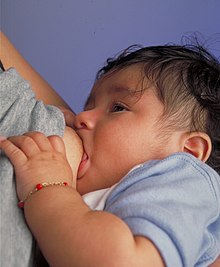
Image from Wikipedia
Upon discharge from their stay in the hospital, many mothers are unable to find and receive skilled breastfeeding support. Mothers often are left on their own to identify resources to help with questions and problems they may have with breastfeeding. Furthermore, hospitals, clinicians in the community, and community organizations typically lack systems to help connect mothers to skilled persons who can offer support for breastfeeding. Ideally, there would be a system to ensure that breastfeeding mothers and their infants would receive skilled support with lactation from informed and available health care teams. Hospitals, primary care clinicians, and community organizations share responsibility for creating such systems.

Implementation Strategies 
Create comprehensive statewide networks for home- or clinic-based follow-up care to be provided to every newborn in the state. Follow-up support for breastfeeding needs to be integrated into home visitation and postpartum care programs. Staff training in breastfeeding management would be fundamental to this care.

Establish partnerships for integrated and continuous follow-up care after discharge from the hospital. Communities often provide a variety of resources to help breastfeeding mothers, including peer support networks, breastfeeding clinics, lactation consultants, and support groups. Health care systems can ensure that their patients are informed about such resources and can facilitate connections to these resources. They can also help to strengthen or create these programs.

Establish and implement policies and programs to ensure that participants in WIC have services in place before discharge from the hospital. Community partners and key stakeholders, such as hospitals, lactation consultants, and other clinicians, can work with WIC to establish continuity of care for WIC participants who breastfeed their infants. In addition, WIC state agencies can collaborate with state hospital associations to identify key barriers to the provision of WIC services within the hospital setting. WIC state agencies and hospitals can partner to establish policies to ensure that WIC participants receive in-hospital
education and support for breastfeeding, including identiication of a WIC peer counselor and scheduling of follow-up support for breastfeeding by WIC staf in the community.

Getting Involved

We try to work as closely as we can with our local hospitals and physicians.  We deliver rental breastpumps to patients in their hospital rooms at Crestwood Hospital. Our Postpartum Support program is a tremendous resource for new mothers who don't have family nearby to help them after baby is born.

Our Bosom Buddies program is specifically designed to help WIC moms by providing them nursing bras. Furthermore, our sliding scale for lactation consultation services in our office ensures that no mother who needs help will ever be refused it due to her inability to pay for an IBCLC.

Monday, August 13, 2012

Action 10: Basic Breastfeeding Support from Health Care Providers

This is the second article in our series about the Surgeon General's Call to Action for Breastfeeding Promotion. Today we're focusing on an action step that we can actually help with significantly.

Action 10. Include basic support for breastfeeding as a standard of care for midwives, obstetricians, family physicians, nurse practitioners, and pediatricians. 
Photo courtesy of the IBLCE   
Midwives, obstetricians, family physicians, nurse practitioners, and pediatricians provide care that supports their patients’ interests and health needs, including breastfeeding. Their full support of breastfeeding may be limited by the use of  practices that unintentionally and unnecessarily interfere with breastfeeding. These practices directly affect mothers’ and babies’ abilities to start and continue breastfeeding.

Implementation Strategies 


Define standards for clinical practice that will ensure continuity of care for pregnant women and mother-baby pairs in the first four weeks of life. The standard of care should include actions that are important for the promotion and support of breastfeeding, including providing prenatal counseling on feeding decisions, setting accountability standards for postpartum follow-up care, monitoring neonatal weight gain, and establishing referral mechanisms for skilled lactation care. Models should be established to integrate assistance with breastfeeding into routine practice settings.

 Conduct analyses and disseminate their findings on the comparative efectiveness of different models for integrating skilled lactation support into settings where midwives, obstetricians, family physicians, nurse practitioners, and pediatricians practice. Skilled lactation support may be provided by trained physicians, by lactation consultants affiliated with a physician practice, through stand-alone clinics, or by referrals. Models of care differ in the degree to which care is provided for all breastfeeding mothers to prevent difficulties and the extent to which care is provided for women already having problems. Identification of best practices and optimal care models is needed.

Getting Involved


We are blessed to live in an area where excellent health-care is available. Many pediatricians are quick to refer mothers to lactation consultants for breastfeeding support. We regularly get calls from their offices requesting consultations for their patients. However, some pediatricians are still quick to suggest that mother's supplement unnecessarily or even stop nursing altogether. Whereas some ob/gyn's are extremely supportive of their breastfeeding patients, others are dismissive at best. 

In many parts of the country lactation consultants are an integral part of the pediatric practice. Therefore, we have designed a program especially for our local doctors to give them the benefit of having a lactation consultant available without having to hire another staff member. Our LC in Your Office program allows even the smallest pediatric or family practice to provide professional breastfeeding support to their patients in the privacy of their office.


Thursday, August 9, 2012

Action Step 12: Make Donor Milk Available


From the Human Milk Banking Association of North America
August is National Breastfeeding Month. The United States Breastfeeding Committee has begun a campaign of 20 steps in 20 days to support breastfeeding. These steps are based on the Surgeon General's Call to Action to Support Breastfeeding. We'll be taking a close look at some of these steps over the next few weeks! The information below comes from page 49 of the above document.

Action 12. Identify and address obstacles to greater
availability of safe banked donor milk for fragile infants. 

Growing evidence supports the role of donated human milk in assisting infants with special needs, such as infants in newborn intensive care units who are unable to receive their own mothers’ milk, to achieve the best possible health outcome. In these situations, use of banked donor milk may protect the infant from the risks that might result from not breastfeeding. Unfortunately, demand for donor milk outpaces supply because of logistical challenges related to transportation of donated milk, the lack of clarity in oversight, and the high cost of providing banked human milk. A national strategy is needed to efficiently and effectively address the issues involved in providing banked donor milk to vulnerable infant populations.

Implementation Strategies 


Conduct a systematic review of the current evidence on the safety and efficacy of donor human milk. A systematic review will provide a common understanding of the health outcomes resulting from the use of this milk by analyzing the results of all of the available published research. Additionally, a systematic review will help identify any areas where the evidence is not conclusive and where more research is needed.

Establish evidence-based clinical guidelines for the use of banked donor milk. Necessary components of the guidelines include discussion of the use of donor human milk for a variety of infants, such as those who have a low or very low birth weight, are premature, or have particular medical needs; issues related to collection of and payment for donor milk; and the complex biomedical ethics of prioritizing the distribution of banked donor milk.

Convene a study on federal regulation and support of donor milk banks. Such a study could examine possible models for regulating and funding milk banks. In addition, it should consider
policy options to address concerns about biomedical ethics related to compensation for donating milk and the for-profit sale of banked donor milk. It also could examine models for payment, including WIC or health insurance program benefits that cover the use of banked donor milk. It is important also to consider how human milk banks might be a resource in planning responses to national emergencies.

Getting Involved

At A Nurturing Moment we are passionate about seeing a human milk bank in Alabama. Melissa did her Master's Thesis on Human Milk Banking. Currently the closest milk bank is in Texas

However, a bank is being developed in Jackson, MS. They are in the process of raising funds to get started. On October 4 they are having a very special fund-raiser -- A special one-night screening of Donor Milk: The Documentary at the Grandview Cinema in Madison, MS. Following the film there will be a question and answer panel with Amy Vickers - executive director of the North Texas Milk Bank, a couple whose baby received donor milk, mothers who have donated, Jarred King - one of the film's producers and Linda Pittman - executive director of the Mother's Milk Bank of Mississippi. 

One key to having a milk bank in a community is the demand for donor milk by the neonatologists. In the Jackson, Mississippi area, the neonatologists regularly prescribe donor milk for those preemies who desperately need it. Parents have the right to demand that their baby receive donor breastmilk if mom isn't making enough milk for baby.  In the future every state should have at least one milk bank, and many states will have more than one (Texas already has two.) We look forward to the day when Alabama has it's very own Human Milk Bank!

Wednesday, August 1, 2012

World Breastfeeding Week: Celebrating 20 Years of Breastfeeding Promotion

It has been 20 years since the World Alliance for Breastfeeding Action (WABA) launched the first World Breastfeeding Week campaign. The theme that first year was "Baby Friendly Hospital Initiative." So much has happened in these last 20 years! Let's look at how far we've come.

  • The Innocenti Declaration from 1990 has continued to be a guiding force in breastfeeding promotion.
  • In 1992 the Healthy Mothers, Healthy Babies Coalition received a grant to move forward with the Baby Friendly Hospital Initiative (BFHI) in the US. Wellstart International in San Diego, CA, developed the assessment tools.
  • In 1997 the Healthy Children Project, Inc. accepted responsibility for the initiative and formed Baby-Friendly USA to implement the BFHI in the US.
  • In 2002, The World Health Organization (WHO) and UNICEF reaffirmed the Innocenti targets and added additional targets in the Global Strategy for Infant and Young Child Feeding.
  • In December of 2011, Regional Medical Center in Anniston became the first Alabama facility to receive the Baby Friendly designation.
  • As of May, 2012, 143 hospitals and birth centers in the United States have received this designation.
However, we still have a very long way to go! One of the goals of this year's World Breastfeeding Week is to call attention to the state of policy and programs related to the feeding of infants and young children.

The New York Initiative
Just yesterday there was a lengthy discussion on the WHNT facebook page about the Latch-On NY initiative which encouraging participating hospitals not to give free formula to women and to only distribute formula when medically necessary. A mother who chooses to formula feed will first learn about the benefits of breastfeeding her baby, at least while she's in the hospital. No mother will be denied formula, nor will any baby ever go hungry. The program is voluntary and simply helps hospitals take steps toward becoming Baby Friendly.  What the critics don't understand is that many hospitals are already doing this - there's been no fanfare or political upheaval about it; rather, they have simply implemented evidence-based medicine in their facilities.

Help for Working Moms
An argument that I have seen repeatedly in this discussion is the hardship that returning to work while breastfeeding imposes on women. The US Department of Health and Human Services office on Women's Health put together a promotion called The Business Case for Breastfeeding. It is very true that many women do indeed struggle. That is why it is so important for employers to recognize the important role they play in supporting their breastfeeding employees. Programs like ANM Workplace Solutions help employers provide the level of support necessary, and actually have a positive Return on Investment!

Truth in Advertising for Formula Companies
This week let's celebrate how far we've come, but let's recognize how far we still have to go! Let's help women and doctors alike understand that breastfeeding isn't just a matter of maternal choice. It is a decision that can affect their baby's health. It's time for our government to sign onto the International Code for the Marketing of Breastmilk Substitutes and stop allowing formula companies to mislead the public. 

No Guilt! Lots of Support!
Should mothers who don't breastfeed be made to feel guilty? No, I don't think this is about guilt. But every mother should have the opportunity to know just why breastmilk is so important for her baby. Furthermore, every mother should have the support necessary to breastfeed successfully.

Thursday, July 26, 2012

Does "Breast is Best" Create a Hardship?

Photo of PumpEase courtesy of  http://www.snugabell.com/
I just came across an interesting article posted in the New York Times in which Jane Brody attempts to use a recent serial  interview study from Scotland to prove a point. She says the American Academy of Pediatrics goal that women exclusively breastfeed for about 6 months is unrealistic and imposes undue hardship on mothers. She relies somewhat on her personal experience 43 years ago when she had her twin sons early by C-section and pumped her milk as they were being fed formula in the hospital. Obviously that wasn't a terribly auspicious beginning for Ms. Brody, and she didn't have the advantage of a supportive lactation consultant since the profession didn't exist 43 years ago. Her OB was quite supportive, but her pediatrician was not, and I must say that I really admire her determination to breastfeed her sons despite some incredible obstacles and without a strong support network.

However, the thing that concerns me the most is the perception of a continued lack of support for nursing mothers in the workplace. Federal law mandates not only that breastfeeding mothers be given break time whenever they need to pump, but it also says that employers with 50+ employees are required to provide a place for pumping that is NOT a bathroom. Many employers have made huge strides in accommodating nursing mothers; nevertheless, some companies may still be unaware of the legal requirement to support these employees. It is vitally important that the women who work in these companies make their HR people aware of their responsibility.

A Nurturing Moment actually has a special program in place specifically designed to help employers offer the best support available to mothers. The return on investment is incredible. Cigna conducted a 2 year study of breastfeeding employees and found that their workplace lactation program produced the following results:

  • $240 million annual savings in health care expenses
  • 62% fewer prescriptions
  • 77% reduction in absenteeism
Mutual of Omaha had the following results with their lactation program:

  • 83% employee retention after maternity leave (national average is 59%)
  • Healthcare claims per breastfed newborn averaged $1269 compared to $3415 for formula-fed infants.
That leads us into a discussion of my second major concern with Ms. Brody's article. She asserts that there is no research to back up the claims of the medical community that breastfed babies are healthier. It looks to me like Mutual of Omaha has done some research that backs that up!(Mutual of Omaha. (2001). Prenatal and lactation education reduces newborn health care costs.Omaha, NE: Mutual of Omaha.) Furthermore, the AAP statement is backed up by significant research. In fact, it contains 151 citations to support it's recommendations. The Academy of Breastfeeding Medicine has also responded to the Times article with a statement calling for enhanced support for all nursing mothers. 


This isn't about Mommy Wars or "Milk Wars." It's about a public health initiative. The worst thing that anybody can do is use guilt in an attempt to motivate a woman to nurse. Guilt is a lousy motivational tool. It is even more awful for anyone, breastfeeding advocate or not, to make a mother feel guilty about her feeding choice once that choice has been made. Life is just too short for guilt! 


So what do we need to do? First of all, we need to make sure that all mothers have access to good prenatal education about breastfeeding. They need to know that it may be challenging. They also need to know where to turn if they do have any problems.  Next, we need to realize that, as one mother so aptly put it, "It takes a village to breastfeed a baby." (thanks, Elizabeth!) That village includes health care providers, community support groups, family, friends, and breastfeeding professionals.  Finally, we all need to strive to make the workplace more supportive for nursing moms. Are you in management? Do you own a business? Do you know someone who does? Find out what they're doing to help their nursing mothers. Ask questions before you get pregnant. If your children are older, then see what you can do to smooth the way for younger women. If we all work together, we can help more moms succeed and avoid a lot of unnecessary guilt.